
MEET JUDGE SHAUNA N. MURPHY
She's our guest speaker on Feb. 4th, hosted by Judge Dan Bain. She's in charge of an interventional court that helps Livingston County veterans to avoid the regular judicial system.
The Honorable Judge Shauna N. Murphy was appointed to the 53rd District Court bench by Governor Rick Snyder on December 26, 2018.
Her roles: District Court Judge, Presiding Judge, Livingston County Veterans Treatment Court
Educational Background: Judge Murphy is a graduate of St. John the Evangelist Catholic School, Fenton High School, and Michigan State University. She earned a Bachelor of Arts degree in Political Theory and Constitutional Democracy with a minor in International Relations from Michigan State University's James Madison College in 2000. She earned her Juris Doctor from the Michigan State University College of Law in 2003. 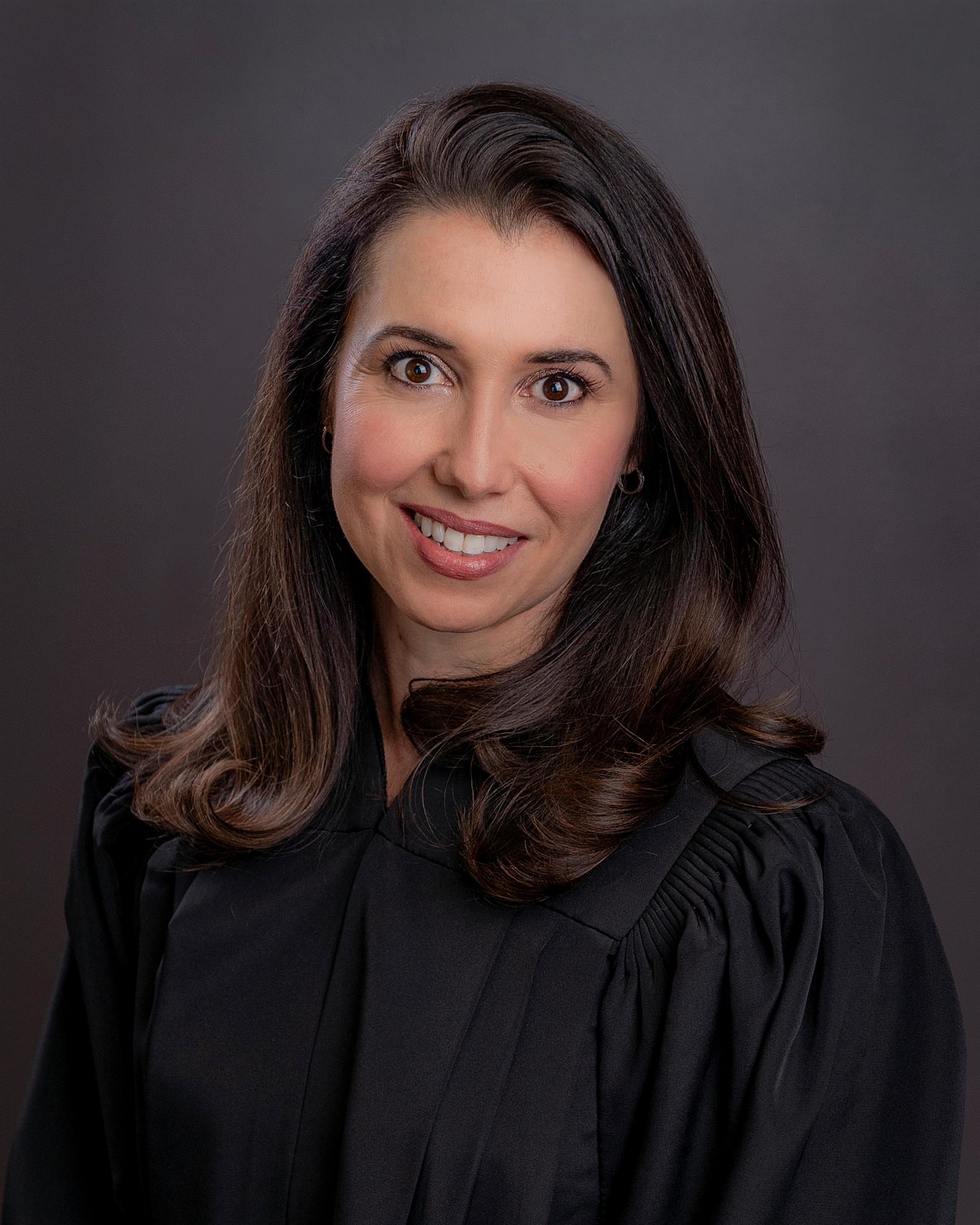
Prior Work History:
Prior to her judicial appointment, Judge Murphy was a courtroom trial attorney for more than 15 years. She litigated thousands of court cases in both state and federal courts. As a Senior Assistant Attorney General in the Health Care Fraud Division of the Michigan Department of Attorney General, she specialized in the prosecution of complex cases involving elder abuse and financial exploitation, nursing home abuse and neglect, Medicaid/Medicare and healthcare fraud, the opioid crisis, and white collar crime. She also negotiated large civil settlements and drafted legislation on behalf of the Attorney General and the State of Michigan.
Prior to joining the Attorney General, Judge Murphy was an Assistant Prosecuting Attorney in the Circuit Court Division of the Oakland County Prosecutor's Office where she prosecuted violent crimes and other felonies as lead trial counsel. Prior to beginning her career in public service, Judge Murphy was a civil litigator and Associate Attorney in the Complex Commercial Litigation Group of the law firm Sullivan, Ward, Asher, and Patton, P.C. in Southfield. As an undergraduate student at Michigan State University, she was a Student Assistant in the Office of the MSU President and Board of Trustees and a Legislative Intern in the Government Policy and Practice Group of the law firm of Dykema Gossett, PLLC.
As a law student at Michigan State University, she was a Law Clerk for the MSU Office of the General Counsel and she completed the Prosecuting Attorneys Association of Michigan Trial Internship Program at the Ingham County Prosecutor's Office.
Professional Associations, Awards, and Other Involvements: Judge Murphy is licensed to practice law in both the State of Michigan and the United States District Court for the Eastern District of Michigan. She is a member of the State Bar of Michigan, the American Judges Association, the Michigan District Judges Association, the Michigan Association of Treatment Court Professionals, the Livingston County Community Corrections Advisory Board, and the Livingston County Bar Association.
Judge Murphy is the recipient of the Prosecuting Attorneys Association of Michigan Ten Years of Prosecution Service Award (2015) and the Oakland County Prosecutor’s Office Distinguished Service Award (2014). She is also the recipient of the “Circle of Light” Award (2009) from the Child Abuse and Neglect Council of Oakland County which was presented to her as a result of her work on behalf of abused and neglected children.
Monday: Criminal pre-trials / Pleas / Arraignments / Formal Hearings / Preliminary Exams
Tuesday: PC Conferences / Criminal Motions / Preliminary exams / Sentencings / PV Hearings / Dog Complaints / Small Claims
Wednesday: Bench Trials / Landlord Tenant / Veterans Court
Thursday: Status Conference / Jury Selection / Landlord Tenant / Civil Motions / Discovery / Civil Pretrial
Friday: Jury Selection / Jury Trials / Bench Trials
WHAT IS A VETERANS TREATMENT COURT?
Veterans treatment court uses a hybrid integration of drug court and mental health court principles to serve military veterans, and sometimes active-duty personnel. They promote sobriety, recovery, and stability through a coordinated response that involves cooperation and collaboration with community and state-wide partners. Veterans Treatment Courts also rely on U.S. Department of Veterans Affairs health care networks, the Veterans Benefits Administration, volunteer veteran mentors, and veterans and veterans family support organizations.